Declutter a Room Without Making a Bigger Mess
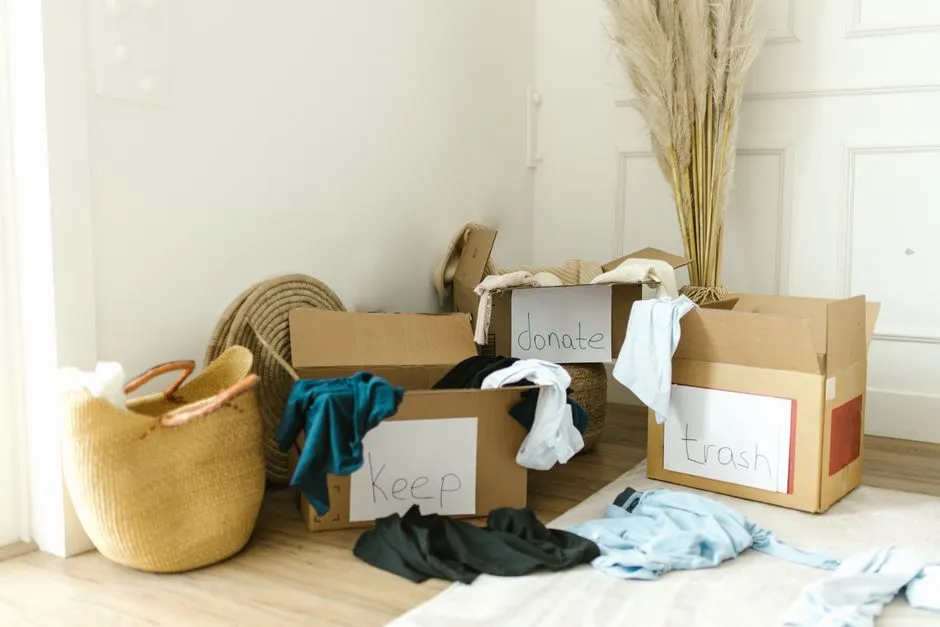
Declutter one small boundary and close the loop
To declutter a room without making a bigger mess, choose one contained area, sort each item directly into a limited set of destinations, and finish those destinations before opening another area. A drawer, one shelf, or a square metre of floor is a project. “The bedroom” is a postal address.
You do not need to empty every cupboard onto the floor. That reveal looks decisive for three minutes and then asks you to make hundreds of choices while climbing over your own socks. Keep most of the room functional and create one visible win. Take a before photo if it helps you notice progress; the camera is a measuring tool, not a witness for the prosecution.
Set four destinations before touching anything
Prepare containers or clearly labelled spots for keep here, move elsewhere, give away, and discard or recycle. Add a fifth, decide later, only if you cap it at one small box. An unlimited maybe pile is simply clutter wearing a committee badge.
Choose the exit before you fill the donation container. Decide which charity, community group, textile collection, recycling facility, or friend can genuinely accept the items. Check current acceptance rules rather than leaving unsuitable goods outside a closed shop.
Keep rubbish bags distinct from donation bags. If several people share the home, avoid removing their possessions without agreement. Less stuff is not a licence to become a surprise customs officer.
Start where decisions are easiest
Begin with expired information, empty packaging, obvious rubbish, duplicates you never choose, and items already marked for departure. Early easy decisions create space for sorting and show how the method works.
Then take one drawer, shelf, or surface from left to right. Pick up each item once and place it in a destination. Do not wander into another room to put away every stray; use the move-elsewhere basket so the active boundary stays small.
Browse decluttering for more small-zone methods.
Keep enough, not an imaginary minimum
Ask practical questions: Do I use this? Does another object do the same job better? Would I look here for it? Does keeping it cost space or maintenance I am willing to give? Is it important for legal, financial, health, cultural, or sentimental reasons?
Minimalism is not a fixed object count. A household with children, hobbies, mobility needs, seasonal equipment, or limited shopping access may reasonably keep more. The goal is to make useful and meaningful things easier to find, not to make the cupboard photogenic at their expense.
For sentimental items, select a small, safe batch and give it unhurried attention later. Do not force memory-heavy decisions at the tired end of a cleaning session.
Stop before the room stops working
Use a boundary or timer, whichever arrives first. Fifteen focused minutes on one shelf can be complete work. When energy drops, stop opening new areas and spend the remaining minutes closing the loop.
Return keep-here items neatly. Carry the move basket through the home once. Seal rubbish and recycling. Label donations, schedule the drop-off, and place them where they will actually leave without blocking a walkway or exit.
If a decision-later box exists, write a review date on it. Until then, store it safely rather than allowing its contents to migrate back across the room like tiny, determined salmon.
Make the cleared area easy to maintain
Give frequently used items the easiest positions. Put categories together only when that matches how you reach for them. A beautiful storage system in the wrong room becomes a scavenger hunt with matching baskets.
Leave a little open capacity where possible. Completely packed storage is difficult to use and quick to disorder. Before buying organizers, live with the edited contents for a week; the shape of what remains tells you more than an aspirational container catalogue.
Use our simple evening reset to keep small strays from rebuilding a pile, and visit daily rhythms for routines that do not require another major sort. The room is finished for today when it works better and every sorting container has a destination—not when every possession has achieved enlightenment.