How to Declutter Books: Keep, Donate or Sell
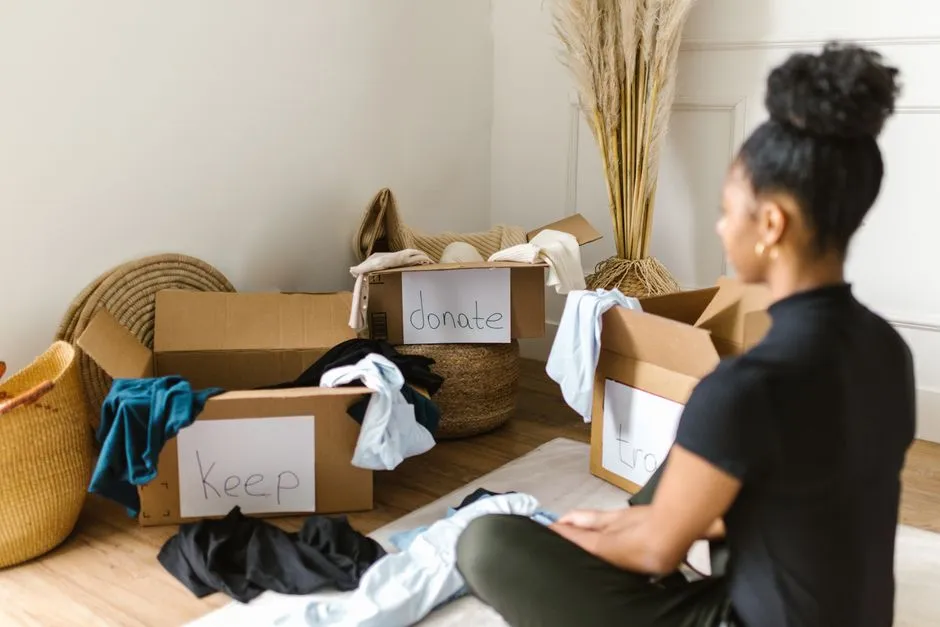
- How do you declutter books without rushing the decisions?
- What should you decide before taking books down?
- Which books have a clear reason to stay?
- What about unread books?
- How do you handle sentimental books?
- Should you donate, give away or sell?
- Do libraries automatically accept book donations?
- What if a book is not suitable for another reader?
- What does a finished shelf project look like?
- How do you keep the result useful?
- Sources
How do you declutter books without rushing the decisions?
To declutter books, choose one shelf, separate books you actively use or genuinely value from those you are ready to release, and assign each outgoing book a confirmed destination. Keep uncertain and sentimental decisions separate from routine sorting. Check donation rules and resale terms before packing, and use your local recycling guidance for unsuitable copies. There is no required number of books to own.
A useful book collection can be large. The question is whether you can find, use and care for the books you choose to keep. A shelf is allowed to contain pleasure, work, memory and unread possibilities; it does not have to justify itself entirely through reading speed.
The method below is an editorial planning framework. The numbered examples are hypothetical, not results from a household study.
What should you decide before taking books down?
Name the problem in one sentence. “I cannot find the cookbook I use” needs a different response from “I am moving and have less shelf space.”
Choose a boundary you can finish: one shelf, one bedside stack or the books from a single course. Do not begin by emptying the entire collection. Our small-area decluttering method covers the mechanics of keeping the rest of a room usable.
Then agree on ownership. Borrowed books belong in a return group, not in your donation decisions. Ask before sorting a partner's books or deciding that a child's collection has been outgrown. Shared shelf space can be negotiated without making one person's tastes the household standard.
Prepare a clear place for books you will keep, books leaving and a small review group. Keep walkways and exits clear. Use manageable loads and get help with books you cannot move safely; do not climb on furniture to reach a high shelf.
Which books have a clear reason to stay?
Instead of asking whether every book is essential, ask what job this particular copy does.
| Reason to keep it | A useful question |
|---|---|
| Current use | Do I consult, teach from, cook from or reread it? |
| Lasting pleasure | Am I glad to see it even between readings? |
| Personal record | Does this copy contain meaningful notes or an inscription? |
| Real access need | Would replacing or borrowing this edition be difficult? |
| Chosen future reading | Do I still want to read it, rather than merely remember buying it? |
These are prompts, not a scoring system. One strong reason may be enough. A heavily annotated paperback can matter more to its owner than an untouched hardcover.
Compare duplicate copies directly. One may have larger print, a preferred translation or useful notes. “Duplicate title” does not always mean “duplicate function.” If the copies really are interchangeable, choose the one you prefer and assess the other's destination separately.
Do not keep a book solely because an imagined future visitor might expect to see it. Equally, do not discard it solely because someone else's minimalism rule says your collection is too large.
What about unread books?
Unread does not mean unwanted. It does mean the original purchase decision is worth checking against your interests now.
Try three questions:
- Would I choose this subject or story today?
- Is this the format and edition I want to read?
- Is there a real reason to keep this copy rather than simply note the title?
If your answer is yes, keep it deliberately. If your interests have changed, you do not need to finish the book before letting it go. Owning a book is not a promise to complete it.
For uncertain titles, choose a small “sample next” group and a review date that fits your actual schedule. Read a little because you want information for the decision, not to pass a test. If you do not sample it by that date, make a fresh choice; the calendar should not automatically throw the book away.
Before relying on a library or digital replacement, check that the exact title, edition, language and accessible format you need are available to you. Do not discard an important working copy on the assumption that every book is easily borrowed.
How do you handle sentimental books?
Separate the memory from the storage question without insisting that one can replace the other.
You might keep the original, photograph an inscription, write a note about the person who gave it to you, or retain one representative volume from a larger group. A photograph can record appearance, but it does not preserve the physical object or its feel. Keeping the book is a valid choice.
For a family collection, identify whose decision it is before proposing a transfer. Ask, “Would you like this copy?” rather than arriving with an unrequested box.
If you suspect a book has unusual monetary or historical significance, pause the ordinary donation process and seek an appropriate bookseller, archivist or conservator's assessment. This guide does not appraise books. Age, a signature or a familiar author's name is not enough information for a reliable valuation.
Should you donate, give away or sell?
Pick a route that matches the book and the effort you can realistically provide.
A direct gift works when a specific person wants the title. Donation works when the receiving organization currently accepts that kind of material. Selling involves checking an actual buyer's requirements and deciding whether its offer or your proposed listing is worth the work.
For a sale, identify the exact edition and describe the condition honestly. Check current payment terms, fees, shipping responsibilities and what happens if a buyer rejects the copy. Do not treat an asking price seen online as money you have received.
Set a personal effort boundary before creating listings. For example, you could choose to research two potentially worthwhile books and donate other acceptable copies. That is a workload choice, not a claim that only two books have resale value.
Keep sale candidates separate from confirmed donations. A book should not be promised to a friend while it is still listed for sale.
Do libraries automatically accept book donations?
No. Two current U.S. examples show why checking first matters.
Chicago Public Library says it does not accept donated materials, citing the processing cost of unsolicited items. By contrast, The Seattle Public Library directs book donors to its Friends organization, which sells and redistributes donated books to support literacy.
Neither example establishes the rules in your town. They also show that supporting a library through donated books does not necessarily mean those books enter its lending collection.
Before packing, ask the intended recipient:
- Are you accepting books now?
- Which subjects, ages, languages and formats do you need?
- What condition is acceptable?
- Are there quantity limits or an appointment requirement?
- Where should donations be handed over?
- What happens to material you cannot use?
Do not leave boxes outside a closed building or use a book-return slot as an unapproved donation point. Confirm the receiving arrangement first.
What if a book is not suitable for another reader?
Check condition before offering it. Missing pages, liquid damage or other substantial defects should be disclosed, not hidden in the middle of a donation box. Ask about the recipient's policy rather than assuming a repairable book is useful to every organization.
For books that cannot be reused, U.S. EPA guidance distinguishes paperback books from hardcovers: its general advice allows paperbacks as they are and calls for removing hardcover covers. The same page says local recycling rules can differ.
Therefore, ask your local program whether it accepts your particular books and how they should be prepared. Do not assume every component belongs in a paper bin. If a copy is contaminated or requires handling you cannot manage safely, ask the waste service about the appropriate route instead of attempting a cleaning or cutting project.
Check ordinary outgoing books for loose receipts, letters and other personal papers. Remove those loose items without damaging the book. Decide separately whether a meaningful inscription is part of the memory you want to keep.
What does a finished shelf project look like?
Here is a hypothetical sort of 18 books:
| Decision | Number | Next action |
|---|---|---|
| Keep | 9 | Return to their chosen shelf |
| Donate or give | 5 | Confirm acceptance and arrange transfer |
| Consider selling | 2 | Check actual terms before listing |
| Review later | 2 | Label the unresolved question and review date |
| Total | 18 | Every book has a stated status |
Nine plus five plus two plus two equals 18. Seven books are candidates to leave, but they have not left merely because they are in boxes. If all seven are transferred, 11 remain: nine keepers and two under review.
This distinction prevents a cleared shelf from disguising an unfinished pile elsewhere. Write the recipient, contact status and next action on the outgoing box. If the first recipient declines, revise the destination rather than leaving the box indefinitely.
How do you keep the result useful?
Arrange retained books around how you look for them: subject, author, language or current use. Choose a system you can explain in a sentence. It does not need matching labels.
Keep the small review group identifiable. Once outgoing transfers are complete, return borrowed books and close any sale listings that no longer apply. Your evening reset can put a current read back in its place; it need not reopen every keep-or-release decision.
The finish line is a collection whose contents you have chosen and whose next steps are clear. An empty shelf is optional.